
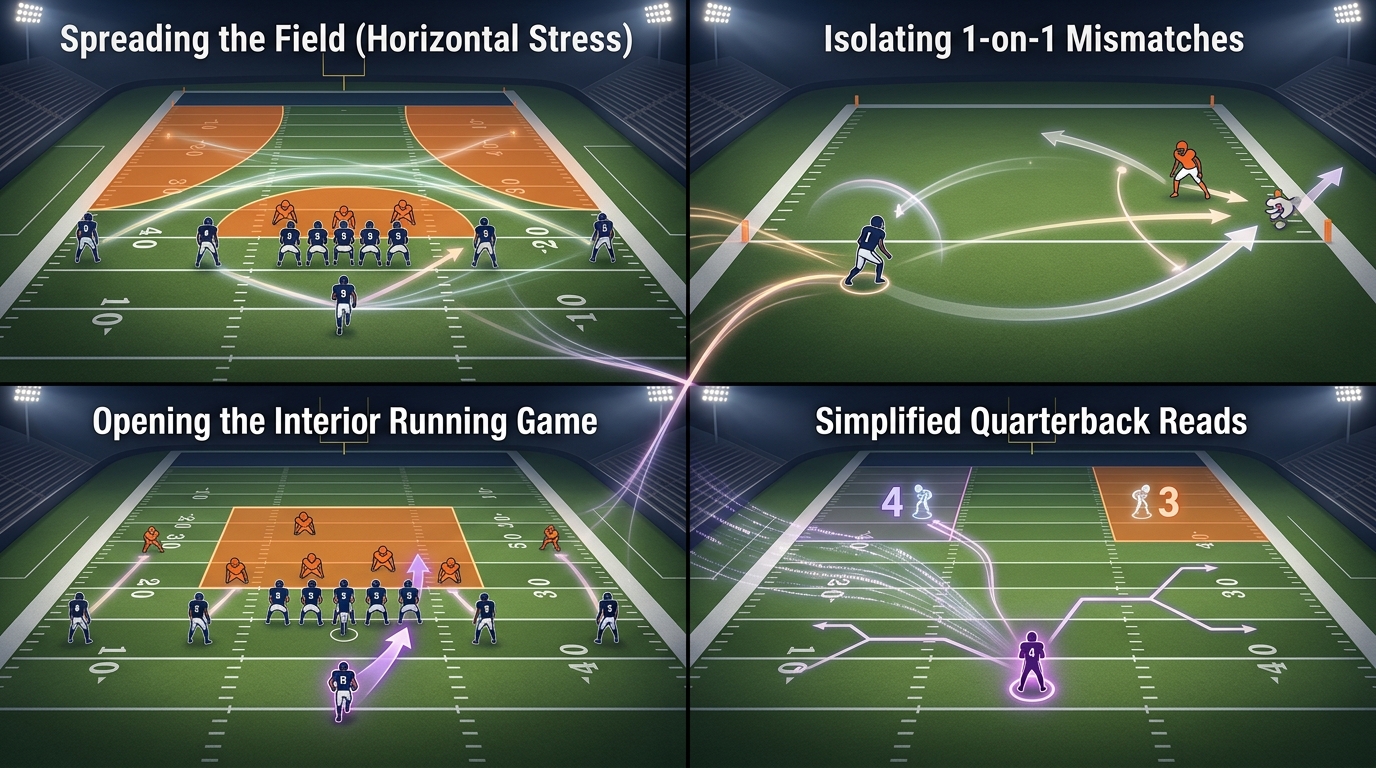
Spreading the field is the single most effective philosophy for modernizing a 9-on-9 football offense. By placing four or five receivers wide across the formation, you force opposing defenses to cover every square foot of turf. Transitioning from compressed formations to a spread concept drastically shifts the balance of power, unlocking vast open spaces and turning routine plays into explosive gains.
Maximizing Field Width and Creating Natural Lanes
A condensed formation plays directly into the defense’s hands by allowing linebackers and safeties to sit comfortably near the box. Spreading your receivers wide immediately dilutes the defensive structure.
Stressing Horizontal Secondary Coverage
Deploying receivers out to the numbers forces cornerbacks and safeties to widen their pre-snap alignments, stretching zone defenses beyond their natural coverage limits.
Opening the Interior Running Game
When defensive backs are pulled out to the perimeter, lightened defensive boxes leave fewer defenders near the line of scrimmage, creating massive running lanes for your interior backfield.
Isolating 1-on-1 Matchups on the Perimeter
Widening the field eliminates secondary help options, forcing defensive coordinators to commit to isolated single coverage on the outside.
Exploit Playmaker Mismatches
By isolating your quick skill players in space, a simple screen or quick hitch pass transforms into a high-percentage play where one broken tackle yields a major downfield gain.
Simplifying Progression Reads for the Quarterback
Complex defenses rely on disguising coverages and rolling safeties late to confuse passers. A spread system strips away defensive pre-snap deception.
Reading Pre-Snap Defensive Numbers
A wide formation makes defensive intentions instantly readable before the ball is even snapped.
Identifying the Advantageous Side
If the defense stacks four players over a three-receiver side, the quarterback simply checks the ball to the opposite side where a numerical or spatial advantage exists.
Creating Clear Vertical and Horizontal Windows
Wide receiver spacing ensures that defenders cannot cover two route concepts simultaneously.
Reducing Miscommunications and Sacks
Clear throw lanes allow quarterbacks to deliver the ball on time with confidence, drastically reducing throw delays and sack opportunities for the pass rush.
Forcing Defensive Fatigue and Communication Mistakes
Operating out of spread formations subjects defenses to continuous spatial stress, wearing down their stamina and focus over the course of a game.
Increasing Defensive Sprint Distances
Zone defenders and linebackers must cover significantly more ground on every single play to contest horizontal throws.
Exploiting Late-Game Fatigue
As defenders tire from chasing fast perimeter routes, their reaction times slow, opening up wide gaps for deep vertical strike plays late in the game.
Inducing Pre-Snap Coverage Miscommunications
Quickly aligning in wide spread formations forces defenders to hurry their pre-snap calls and coverage assignments.
Capitalizing on Coverage Busts
Offenses that pair spread alignments with a fast tempo regularly catch defensive backs out of position, leading to uncovered receivers and easy touchdowns.
Leave a Reply