
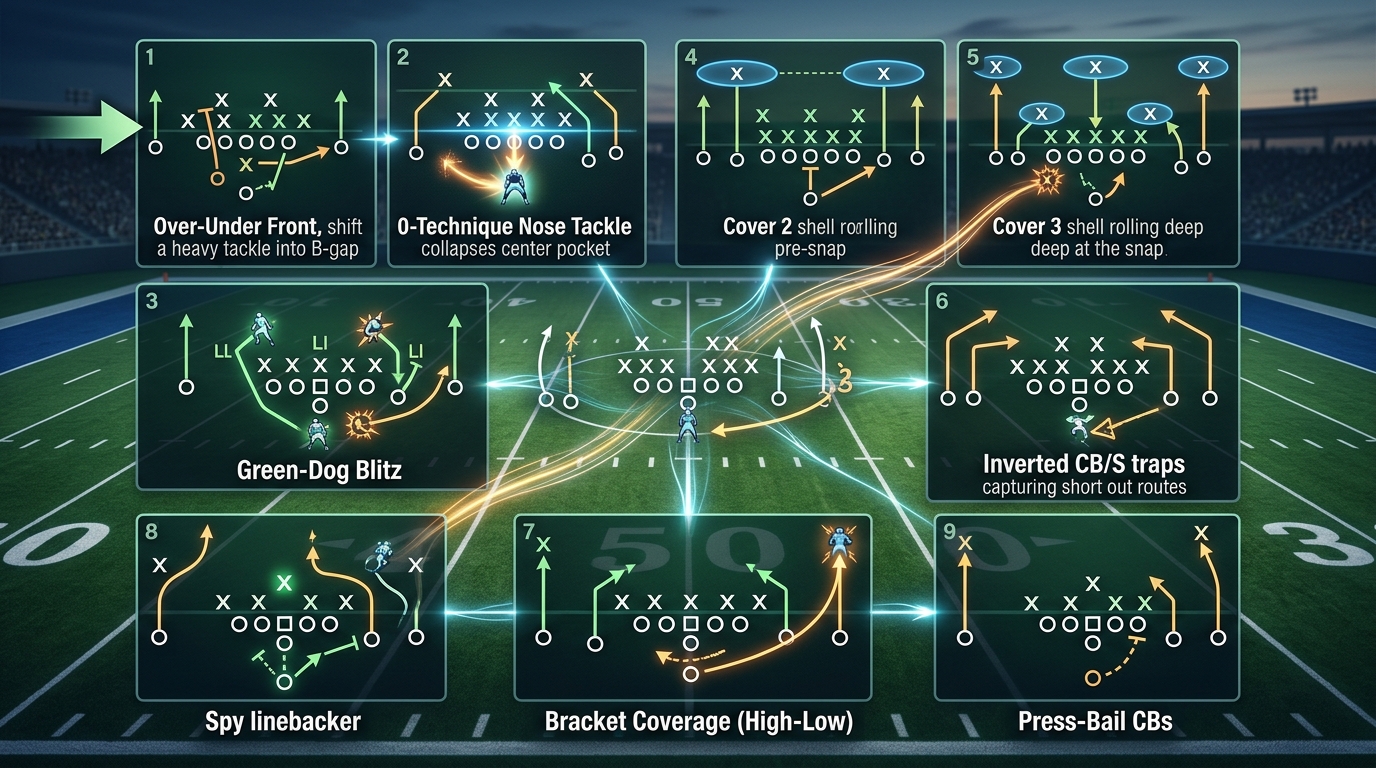
In the fast-paced environment of 9-on-9 football, momentum can shift in a single play. Defensive coordinators often enter a game with a solid blueprint, but great offenses adapt quickly. Staying one step ahead requires making real-time, decisive adjustments on the sideline. Implementing key structural tweaks can disrupt an opponent’s rhythm, confuse their quarterback, and completely turn the tide of a game.
Front-Seven Tweaks to Disrupt the Running Game and Pocket
Controlling the line of scrimmage is essential. When an offense establishes easy gains through quick runs or comfortable pockets, these front-seven modifications restore control.
Shifting to an Over-Under Front Alignment
Shifting your defensive linemen relative to the offensive line’s strength manipulates interior gaps and confuses blocking assignments.
Clogging Immediate B-Gap Lanes
Moving a defensive tackle into a heavy 3-technique position seals off quick inside handoffs, forcing the running back to bounce outside into pursuing edge defenders.
Deploying the Zero-Technique Nose Tackle
Placing a quick, powerful nose tackle directly over the center disrupts quick-snap timing and alters interior passing lanes.
Collapsing the Pocket instantly
An aggressive center rush collapses the front of the pocket, preventing the quarterback from stepping up to deliver deep throws.
Switching to a Delayed Green-Dog Blitz
A green-dog blitz instructs linebackers to drop into coverage initially, then rush the passer if their assigned running back stays in to block.
Outnumbering Pass Protection Schemes
This technique creates a sudden numerical advantage for your rushers, overwhelming the offensive line after they have already set their protection.
Secondary Coverage Rotations and Traps
When an opposing quarterback starts completing high-percentage passes, rotating your secondary coverage confuses pre-snap reads and generates takeaways.
Rolling from Cover 2 into Cover 3 at the Snap
Showing a two-high safety look before the snap and rolling into a single-high Cover 3 structure as the ball is snapped completely alters the quarterback’s planned reads.
Baiting Throwing Lane Errors
Quarterbacks who expect open middle-field seams throw directly into the dropping middle safety, creating ideal interception opportunities.
Inverting Cornerback and Safety Responsibilities
Having cornerbacks drop deep while safeties jump the short flats reverses traditional defensive responsibilities to throw off timing routes.
Trapping Quick Out and Hitch Patterns
An aggressive safety jumping from high coverage down into the flat intercepts quick rhythm throws that quarterbacks assume are wide open.
Implementing In-Game Bracket Coverage
Dedicating two defenders to bracket the opponent’s primary playmaker shuts down their go-to option on critical third downs.
Denying Separation on Clutch Downs
With one defender playing low-inside and another covering high-outside, the receiver has nowhere to break free, forcing the quarterback into secondary progressions.
Strategic Scheme Adjustments for Specific Threats
Targeting the offense’s favorite play concepts with tailored situational defenses strips away their confidence.
Converting to a Read-and-React Spy Package
Assigning an athletic linebacker or hybrid safety as a dedicated spy prevents mobile quarterbacks from breaking free on broken plays.
Neutralizing Scramble Yardage
The spy ignores route progressions and focuses solely on the quarterback’s hips, closing down running lanes the moment the quarterback breaks the pocket.
Enforcing Press-Bail Technique Against Vertical Routes
Cornerbacks line up tightly in press alignment to disrupt receiver releases, then immediately bail into deep zone coverage.
Denying Deep Balls Without Giving Up Position
This technique disrupts quick timing throws at the line while ensuring your secondary never gets beaten over the top by explosive vertical routes.
Leave a Reply