
Mastering offensive spatial awareness is the key to breaking down defenses in 9-on-9 football. With nine players on the field, offensive coordinators have the unique flexibility to balance pass protection with overwhelming receiving threats. Choosing the right formation forces opponents to play your style of game and creates mismatch opportunities on every down.
Balanced Formations for Versatile Play-Calling
Balanced setups distribute personnel evenly, making it difficult for defensive coordinators to predict whether a run or pass is coming before the snap.
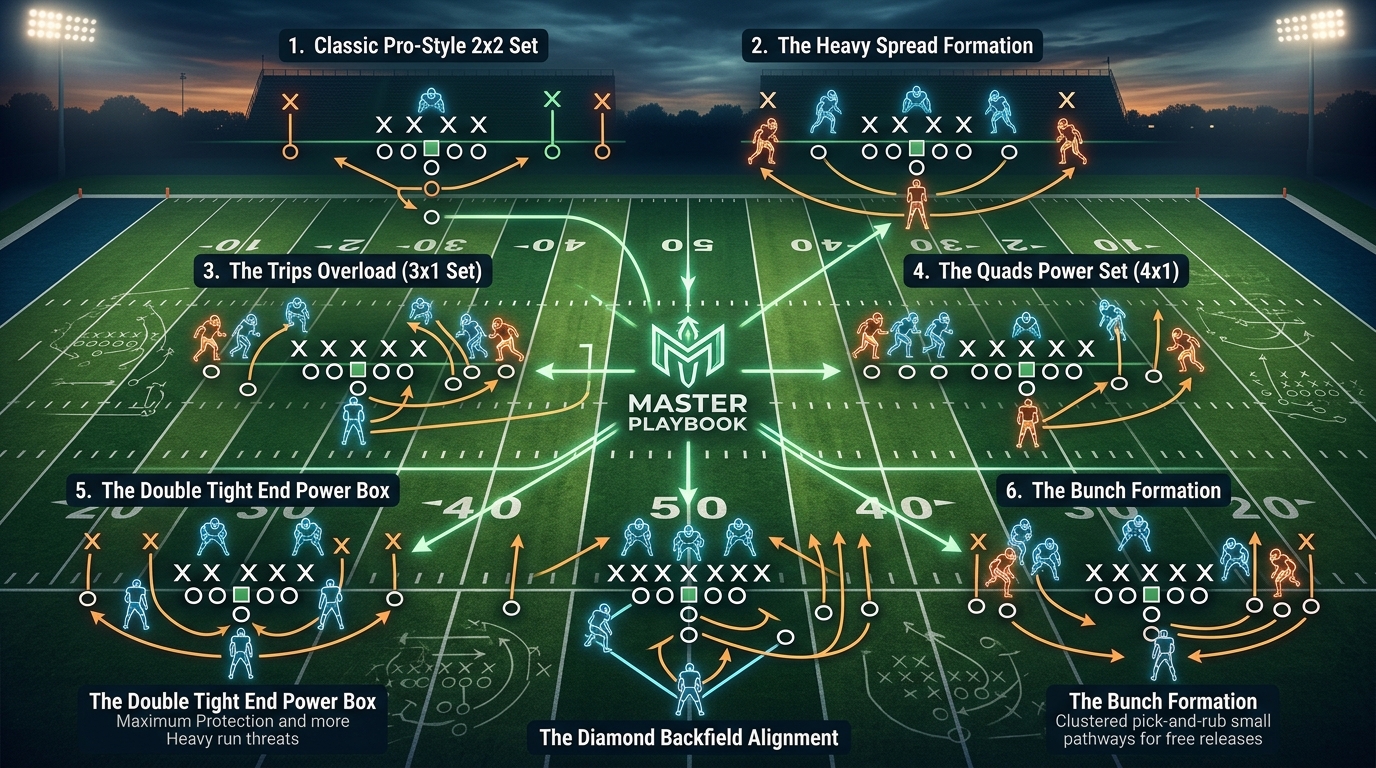
The Classic Pro-Style 2×2 Set
The 2×2 alignment features two eligible receivers on either side of the formation alongside a balanced offensive line. This spread forces defenders to cover the full width of the field, opening up clean throwing lanes down the middle.
Isolating Key Matchups
By spreading defenders wide, quarterbacks can easily pre-read defender depth. If a cornerback plays soft, a quick hitch or out route guarantees easy yardage.
The Heavy Spread Formation
The Heavy Spread utilizes four wide receivers and a single running back, maximizing perimeter spacing while maintaining an immediate inside running threat to keep linebackers honest.
Forcing Defensive Dilution
Defenses are forced to pulled linebackers out of the box to cover receivers in space, leaving fewer defenders to stop quick quarterback draws or handoffs.
Asymmetric and Unbalanced Power Looks
Overloading one side of the field creates instant numerical advantages that catch base zone coverages off guard.
The Trips Overload (3×1 Set)
By placing three receivers on one side and a single split end on the other, the Trips formation tests a defense’s communication and field coverage limits.
Creating High-Low Zone Floods
Trips sets allow coaches to run flood concepts where three receivers enter the same side of the field at varying depths, overwhelming zone defenders.
The Quads Power Set (4×1)
An extreme version of the overload, Quads places four receivers on one side. This ultra-aggressive look demands immediate defensive adjustments or risk giving up an easy completion.
Dynamic Screen Options
Quads sets are ideal for rapid bubble screens, using three receivers as lead blockers for a playmaker catching the ball behind the line of scrimmage.
Tight-Pack and Compressed Formations
Lining receivers up close to the offensive line creates confusion for defensive backs relying on pre-snap reads.
The Double Tight End Power Box
Utilizing two tight ends attached to the line creates additional gap threats for the running game while establishing maximum protection for deep passing plays.
Setting Up Play-Action Bombs
Faking a heavy run out of a tight formation draws linebackers into the line of scrimmage, opening massive passing corridors behind them downfield.
The Bunch Formation
Grouping three receivers closely together just a few yards behind the line of scrimmage creates immediate pick-and-rub opportunities against tight man coverage.
Free Releases Against Press
Because receivers cross paths instantly after the snap, defensive backs struggle to press without bumping into each other, granting receivers free releases down the field.
The Diamond Backfield Alignment
Placing three running backs or h-backs in a diamond shape behind the quarterback creates ultimate flexibility for option runs, power sweeps, and backfield wheel routes.
Confusing Second-Level Linebackers
With three potential ball-carriers moving at the snap, linebackers are forced to freeze for a split second, giving your ball-carrier the edge needed to gain significant yardage.
Leave a Reply