
The most common and costly mistake 9-on-9 football teams make before the snap is tipping their plays through predictable alignment, slow tempo, and static formations. In a small-sided format where space is at a premium, giving the defense early clues allows linebackers and safeties to jump route patterns, stack the box, and neutralize playmakers before the ball is ever snapped.
Failing to Disguise Formations and Personnel Telltales
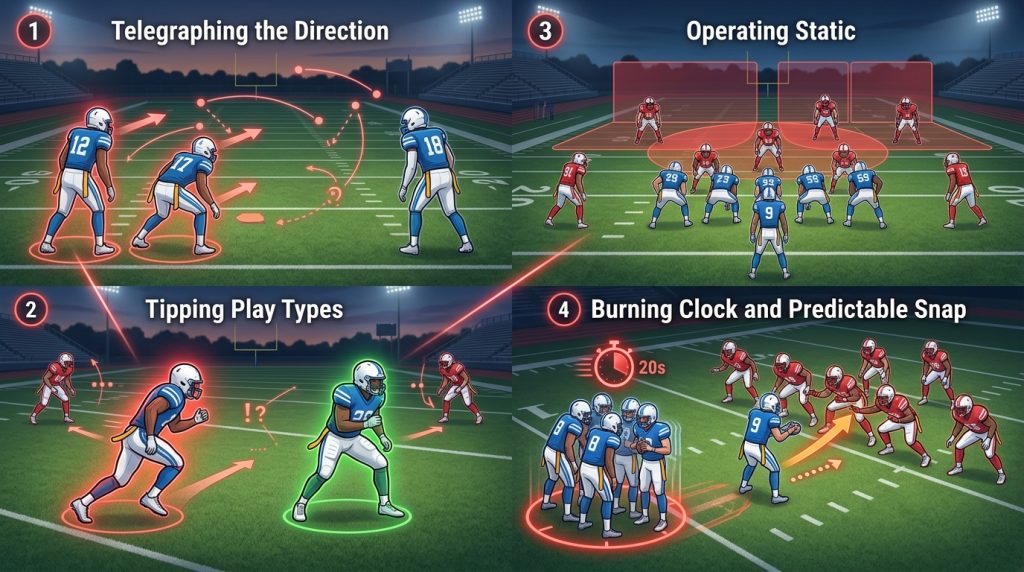
Offenses often align in identical splits based on the play call, making it effortless for the defensive coordinator to diagnose the play pre-snap.
Telegraphing the Direction of the Play
When receivers line up too wide or too narrow depending on whether they are running an inside slant or an outside stretch, defense players spot the trend instantly.
Standardizing Pre-Snap Alignment Rules
Receivers must maintain consistent field splits regardless of the play call. Consistent spacing prevents cornerbacks from squatting on short routes or dropping deep early.
Tipping Play Types Through Backfield Stance
Running backs and quarterbacks frequently give away run-pass tendencies through subtle body language cues in the huddle and pre-snap stance.
Eliminating Physical Telegraphs
A running back leaning forward on run plays or leaning back on pass protection signals the defense’s rush unit. Enforcing balanced, neutral stances keeps the pass rush guessing.
Operating Without Pre-Snap Motion or Shift Rules
Standing completely static before the snap hands all the structural leverage to the defense.
Allowing the Defense to Sit in Comfortable Shells
Static formations let defensive backs stay in preferred zone coverages without having to communicate or adjust under pressure.
Forcing Real-Time Defensive Adjustments
Utilizing jet sweeps, orbit motion, or late formation shifts right before the snap forces defenders to communicate on the fly, often creating broken coverages and wide-open targets.
Ignoring the Pre-Snap Numbers Advantage
Failing to count defenders relative to field zones leads quarterbacks to throw directly into overloaded secondary coverage.
Teaching Quick Spatial Calculations
Quarterbacks must scan the field to ensure a numerical advantage before snapping the ball. If the defense overloads the strong side, the play should be checked to the weak side immediately.
Burning Too Much Clock in the Huddle
A slow, sluggish pre-snap cadence allows the defense to catch its breath and set up complex blitz packages.
Giving Away the Element of Tempo
Taking twenty seconds between plays strips away offensive momentum and lets the defense dictate the pace of the game.
Implementing a No-Huddle Rhythm
Transitioning to a fast-paced, wristband-driven no-huddle offense keeps defenders gassed and prevents them from substituting specialized coverage personnel.
Running Predictable Snap Cadences
Snapping the ball on the exact same count every play allows edge rushers to time the snap perfectly.
Varying the Cadence to Freeze Rushers
Mixing in hard counts and delayed snaps forces defensive linemen to hesitate, neutralizing their initial explosive push off the line of scrimmage.

Leave a Reply