
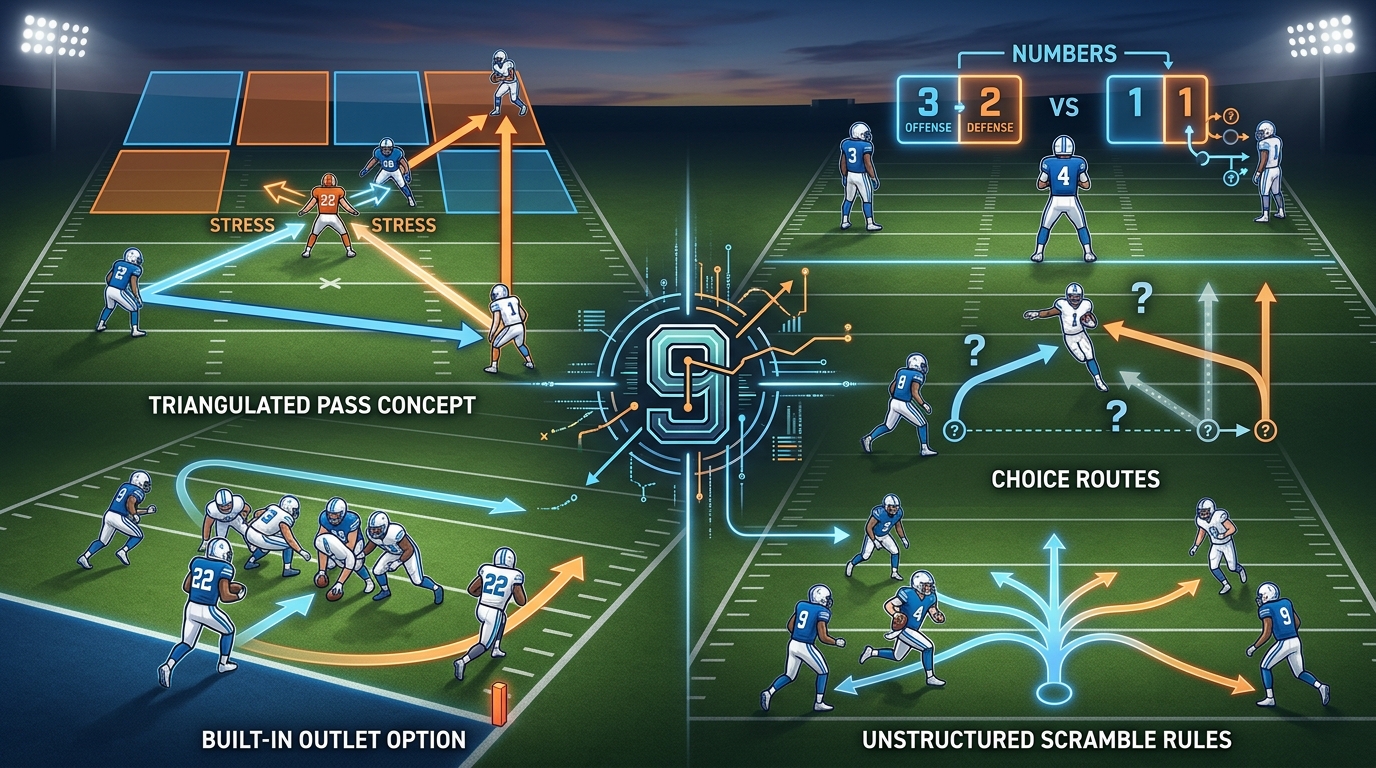
Designing an unstoppable offense in 9-on-9 football comes down to creating option-rich play structures that give your quarterback a quick answer against any defensive scheme. Rather than relying on a single vertical shot or an isolated receiver matchup, multi-option play designs use layered route depths and pre-snap flexibility to put constant stress on second-level defenders.
The Triangulated Pass Concept Structure
A multi-option play design creates a three-tier triangle of targets in the quarterback’s field of vision, simplifying progression reads while overwhelming regional coverage.
Distributing Receivers Across Three Field Depths
By placing receivers at short, intermediate, and deep levels on the same side of the field, the play forces defensive backs into an impossible choice.
Creating the High-Low Stress Trap
The high route pulls the safety deep, while the shallow route draws the corner up. This leaves the intermediate option wide open in the soft void between coverage zones.
Incorporating Built-In Outlet Options
Every multi-option play design must include a reliable safety valve option for when downfield coverage locks down tightly.
The Backfield Leak Route
A running back delaying for a split second before leaking into the weak-side flat gives the quarterback a high-percentage escape valve to avoid pressure and pick up positive yardage.
Pre-Snap Flexibility and Option Adjustments
Giving your quarterback control over the play before the ball is even snapped ensures the offense always attacks the path of least resistance.
Reading Pre-Snap Coverage Numbers
A multi-option design relies on simple spatial counts to determine where the ball should go prior to the snap.
Checking to the Numbers Advantage
If the defense stacks five players over your three-receiver side, the quarterback audibles to a weak-side isolated option or quick perimeter screen where defenders are outnumbered.
Choice Routes for Playmaker Receivers
Integrating choice options allows your top receiver to adjust their route based on the defender’s leverage.
Exploiting Cushion and Press Alignment
If the corner plays off, the receiver breaks on a quick hitch; if the corner presses tight, the receiver converts to a vertical fly route, giving the quarterback an instant win.
Executing the Progression Sequence Under Pressure
Having multiple options only works if the quarterback can progress through their targets efficiently without taking a sack.
Developing a Two-Second Progression Rhythm
Multi-option plays are engineered for speed, requiring the quarterback to keep their feet tied to their eyes as they sweep across field zones.
Reading Key Defensive Conflict Players
Rather than reading individual receivers, the quarterback tracks a single “conflict defender”—usually a linebacker or nickel corner—and throws wherever that defender isn’t.
Capitalizing on Scramble Drill Options
When the pocket collapses, a multi-option design naturally transitions into structured scramble rules for every receiver on the field.
Converting Secondary Routes to Open Spaces
As the quarterback moves outside the pocket, deep receivers break back toward the ball while short receivers push upfield, providing clear throwing channels on extended plays.
Leave a Reply