
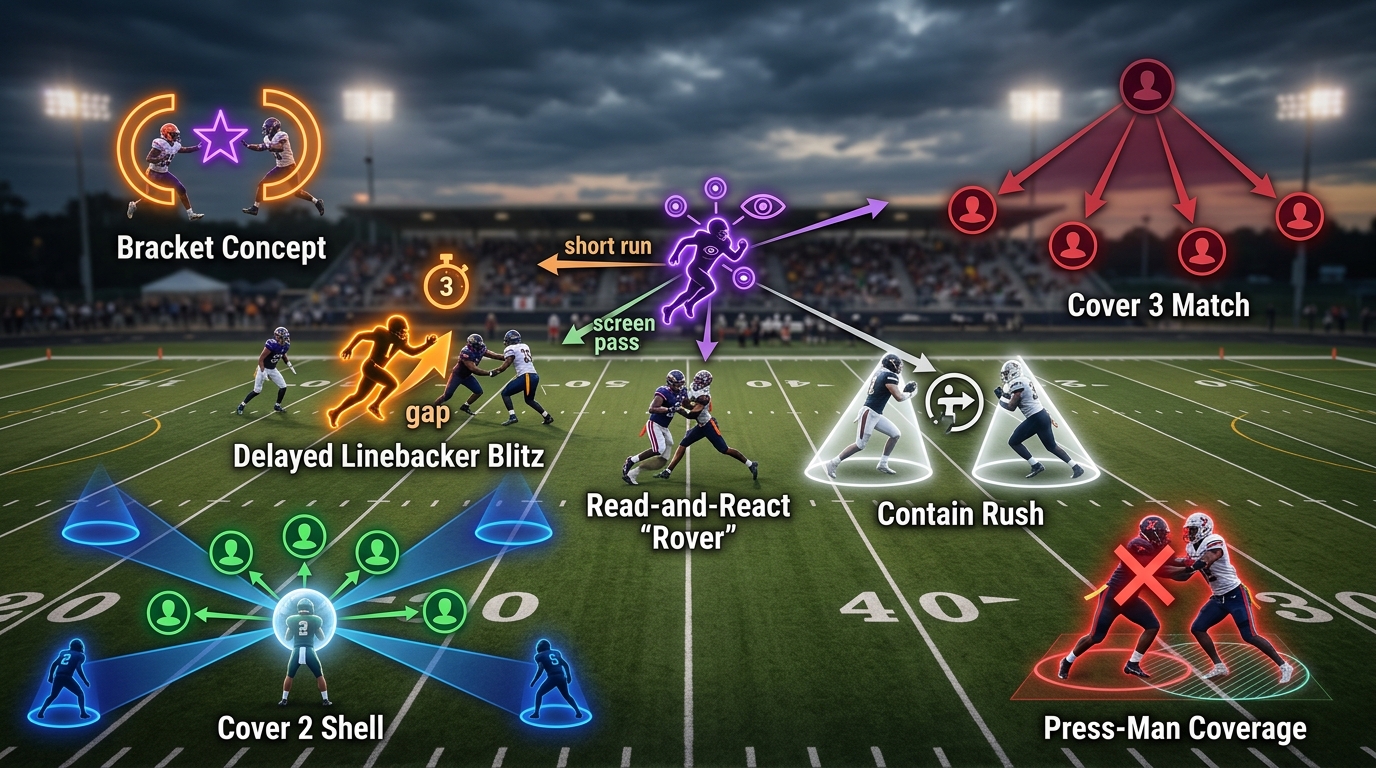
Defending open space in 9-on-9 flag football requires a careful blend of discipline, speed, and strategic communication. With fewer defenders than traditional 11-on-11 play but more receiving threats than small-sided formats, defensive coordinators must deploy smart coverage schemes and aggressive rush tactics to disrupt the offense’s rhythm and force game-changing turnovers.
Core Zone Coverages to Control the Field
Zone schemes allow defenders to keep their eyes on the quarterback, jump route breaks, and swarm to the ball for quick flag pulls.
The Standard Cover 2 Shell
Cover 2 drops two deep safeties to protect against big plays while five linebackers and defensive backs guard the short-to-intermediate zones.
Protecting the Deep Sidelines
Safeties must stay deep and split the difference between the hash marks and the sidelines, preventing wide receivers from getting behind the secondary on streak or post routes.
The Aggressive Cover 3 Match
Cover 3 drops three defenders deep while four players cover the short flats and hook-to-curl areas, creating a balanced shell against deep passing attacks.
Sealing the Deep Middle
The single high safety sits in the deep middle to erase post routes, forcing the quarterback to make lower-percentage throws toward the outside boundaries.
Man-to-Man Tactics and Hybrid Concepts
When zone coverage leaves wide gaps in space, man-to-man principles can lock down receivers and force the quarterback to hold the ball.
Press-Man Coverage with Safety Help
Aligning defensive backs directly on the line of scrimmage disrupts timing routes and delays receiver releases instantly at the snap.
Disruption at the Line
Cornerbacks use quick footwork and subtle hand contact within legal rules to redirect receivers off their intended paths, ruining the timing of quick-passing plays.
The Bracket Double-Team Concept
Bracketing involves dedicating two defenders to a single elite receiver, placing one in under coverage and the other over the top.
Neutralizing the Star Playmaker
By taking away the opponent’s primary target, you force the quarterback to progress to secondary options they may not trust under pressure.
Pressure Schemes and Defensive Line Play
A strong coverage scheme means little if the quarterback has unlimited time in the pocket to wait for routes to develop.
The Delayed Linebacker Blitz
Sending a linebacker through a central gap right as the rush count expires catches the offensive line off guard and creates immediate pocket collapse.
Timing the Snap Count
Blitziing linebackers must disguise their depth before the snap, sprinting forward at maximum speed the moment the legal rush restriction lifts.
The Contain Rush Technique
Pass rushers focus on taking wide angles to seal the pocket’s perimeter, keeping mobile quarterbacks contained within the tackle box.
Denying Off-Script Scramble Plays
By refusing to over-penetrate, rushers prevent dual-threat quarterbacks from escaping outside and throwing on the run.
The Read-and-React “Rover” Hybrid
Positioning a high-iq defensive athlete in a floating “rover” role between the line of scrimmage and the linebackers allows them to erase short runs, shut down quick screens, and drop into passing lanes dynamically based on pre-snap reads.
Snuffing Out Perimeter Screens
The rover aggressively reads the quarterback’s shoulders, reacting instantly to break on wide receiver screens before blockers can set up their walls.
Leave a Reply